
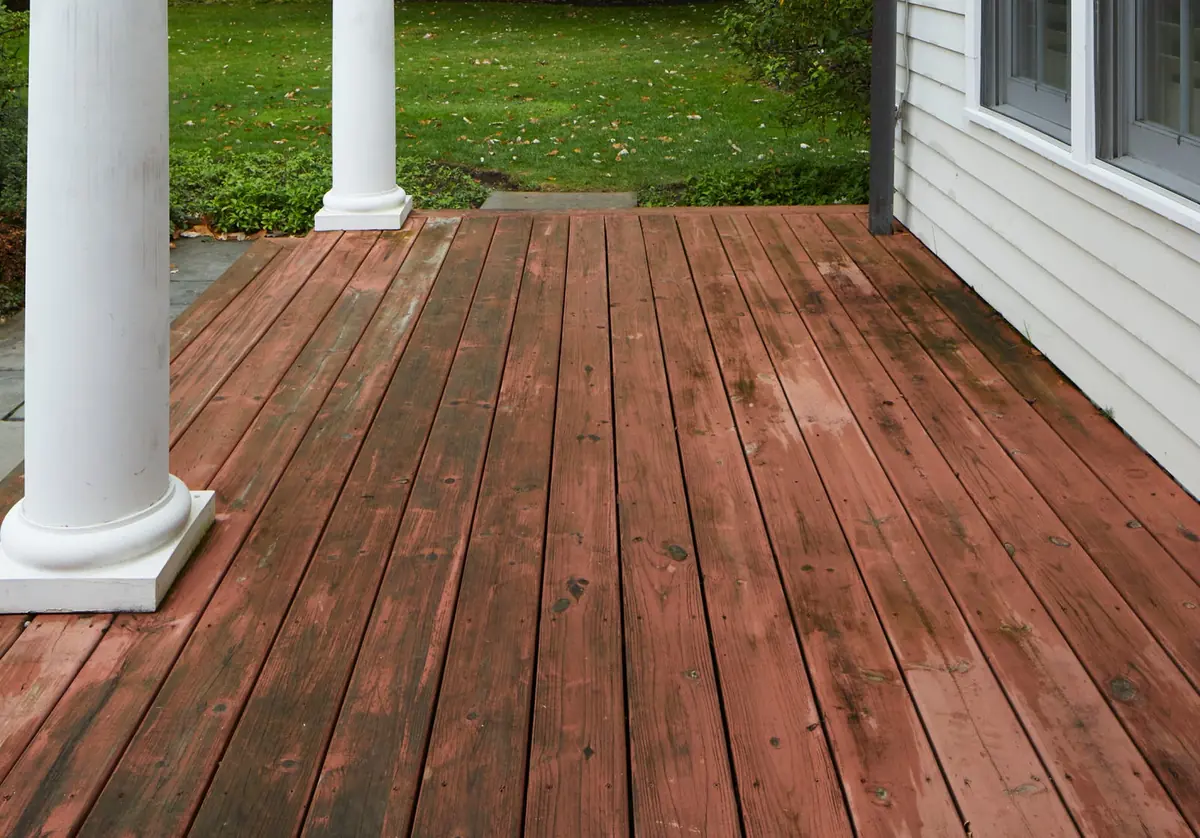
Deck repair covers the fixes that keep an existing deck safe and usable: replacing rotted or split boards, re-securing loose railings, rebuilding failing stairs, and repairing damaged joists, beams or the ledger where the deck meets the house. Louisville Decks repairs decks across Louisville, Kentucky. As a division of Louisville Roofing, we pay close attention to the thing behind most serious deck damage, which is water getting into the structure.
What a repair inspection looks at
A deck repair starts at the surface and works down to the structure.
| Area | What to look for | Why it matters |
|---|---|---|
| Deck boards | Soft spots, deep splits, cupping, popped fasteners | Trip hazards, and a sign water is sitting on the frame |
| Railings and posts | Wobble, rot at the base, loose bolts | A guard has to hold an adult leaning on it |
| Stairs | Cracked treads, rotted stringers, a sinking bottom landing | Stringer bottoms sit closest to wet ground |
| Ledger board | Rot, missing flashing, nails instead of bolts or structural screws | It carries one end of every joist |
| Joists, beams, footings | Rot on joist tops, sagging spans, posts that have shifted | Damage that hides under good-looking boards |
The ledger, flashing and water
Deck safety groups commonly point to the ledger connection, where the deck fastens to the house, as the leading cause of deck collapses. The usual story is water: flashing was never installed or has failed, water runs behind the ledger, and the ledger and the house rim joist rot together.
Keeping water out where a structure meets a house wall is daily work for a roofer, and it is the same detail here. A ledger repair can mean new flashing, new structural fasteners, or a replacement ledger with the joists shored up while it is swapped. If the house rim joist behind it is soft too, that gets fixed before anything is bolted back on.
Repair or replace?
HomeGuide’s rule of thumb: once repairs approach about half the cost of replacing the deck, replacement usually makes more sense. Our deck builder has a repair mode: check what needs fixing, send us the plan, and we will tell you plainly if replacing makes more sense. The real price is set on site.
Where the frame is sound and only the surface is worn, deck resurfacing puts new boards on the old frame. Where it is not, a new deck through custom deck design and construction is the better use of the money. Guards and steps that fail on their own have a dedicated page: deck railing and stair replacement.
Matching new boards to old
A few new boards on an older wood deck rarely match at first. New pressure-treated pine is greener and new cedar is brighter than weathered boards, and they even out as they weather. Composite is harder to patch invisibly, because colors are discontinued and older boards fade, so a large composite repair sometimes turns into resurfacing one whole section.
If your deck is soft underfoot, the railing moves when you lean on it, or the stairs flex, call or text (502) 561-0375 and stay off the weak spot until someone has looked at it.
Questions homeowners ask about deck repair
Is it cheaper to repair or replace a deck?
Repair is cheaper when the problems are limited to boards, a few joists, a stair or a railing. When the ledger, several joists and the posts all need work, the bill gets close to a new deck, and HomeGuide’s rule of thumb says replacement is worth pricing once repairs near half the replacement cost.
Can a handyman repair a deck?
A handyman can swap a few boards or tighten hardware. Structural repairs, meaning ledgers, beams, posts, footings, stairs and guards, are governed by the residential code and often need a permit, so they belong with a contractor who builds decks.
Do I need a permit to fix an existing deck?
Replacing a handful of boards usually does not need one. Replacing structural parts such as the ledger, beams, posts or stairs often does. Check with Louisville Metro before structural work begins.
How often does decking need to be replaced?
There is no fixed schedule. Wood boards need replacing when they turn soft, split deeply or cup enough to trip on, and how fast that happens depends on sun, shade, drainage and how often the deck was sealed. Capped composite boards do not rot the way wood does, but the wood frame under them still can.